






Information Details
The working principle of a carburetor
Author:
Source:
Release date:
2023-06-09
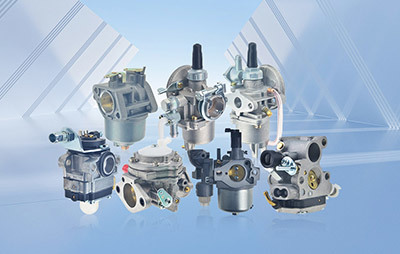
The carburetor is a crucial component of a vehicle’s fuel system. Its primary function is to vaporize and mix the fuel, creating a combustible air‑fuel mixture that is delivered to the engine. The carburetor operates by injecting liquid gasoline into the airstream within its chamber via jets and nozzles, where it mixes with air to form a gaseous fuel‑air mixture. This mixture is then drawn into the engine’s combustion chamber, where it ignites to propel the vehicle. Below, we will provide a detailed explanation of how the carburetor works.
The carburetor is mainly divided into two parts: the fuel supply system and the air supply system.
Fuel Supply System
The fuel supply system primarily consists of a fuel tank, fuel lines, a fuel pump, an air–fuel ratio regulator, the main throttle valve, the idle throttle valve, a float valve, and fuel injectors. The fuel pump is responsible for delivering gasoline from the vehicle’s fuel tank to the carburetor, while the float valve regulates the fuel level in the tank to ensure the correct air–fuel mixture.
Oil pumps are broadly classified into mechanical oil pumps and electric oil pumps. Mechanical oil pumps, driven by the engine, draw gasoline from the fuel tank through the fuel lines and deliver it to the main and idle throttle valves of the carburetor—also known as the air‑fuel ratio regulator—where they regulate the fuel flow and the air‑fuel mixture to achieve optimal ignition and maximize power output. Electric oil pumps, on the other hand, are powered primarily by electricity and pump gasoline through the fuel lines directly into the carburetor.
Air Supply System
The air supply system primarily consists of the intake manifold, throttle valve, air filter, throttle shaft, safety device, and speed‑curve adjuster. The air filter’s main function is to filter and purify the air entering the carburetor, preventing dust and foreign particles from contaminating the carburetor and compromising fuel quality and the air–fuel mixture ratio. The throttle valve regulates the amount of air admitted into the carburetor, thereby controlling fuel flow and the air–fuel ratio, and adjusting the engine’s speed and power output.
The carburetor’s internal components primarily include a float valve, fuel jets, the carburetor chamber, and an electric heater. After gasoline is sprayed from the fuel jets, it mixes with air to form a combustible mixture that enters the engine for combustion, generating power to propel the vehicle.
In summary, the carburetor operates by mixing gasoline with air to produce a combustible mixture, enabling the engine to run smoothly and efficiently and ensuring the vehicle’s proper operation. Today, with advances in technology, carburetors have largely been replaced by fuel‑injection systems; however, their fundamental operating principle remains unchanged.


Phone:
Email:
WhatsApp/WeChat:
Address:
No. 8, Lane 5, Yongkang Road, Tietang Industrial Zone, Fuding City, Fujian Province

WeChat Official Account
Welcome to leave a comment.
*Please keep your phone accessible; we will contact you promptly. Alternatively, you may call us directly at 0593-7858668.